
Guide · November 2026 · 4 min read
Building a Lakefront Home in North Idaho
A home on the water is the dream that brings a lot of people to North Idaho. It is also the most regulated land you can build on. The shoreline, the lake and the dock each have their own rules and their own agency, and the order you deal with them in matters. Here is what to know before you buy, and before you draw.
The first 25 feet belong to the lake
In Kootenai County, the strip of land within 25 feet of the ordinary high water mark, measured as a slope distance, is a shoreline management area. That applies along every recognized lake, the Coeur d’Alene River and the Spokane River. Inside it you generally cannot excavate, cut trees or brush, place structures or retaining walls, or bring in fill or sand. Limited access is allowed, such as a stairway, a walkway or a tram, and the county wants a site plan showing everything you intend to do there.
On Coeur d’Alene Lake, the county sets the high water mark at a fixed elevation, 2,128.71 feet. Cities set their own buffers, and other counties differ. In Bonner County, the setback from Lake Pend Oreille is 40 feet.
These rules are enforced. In one Lake Coeur d’Alene case that reached the Idaho Supreme Court, the county withheld occupancy of an entire home over landscaping that violated the site disturbance rules. The time to get the shoreline right is before the excavator shows up.
The dock is its own permit
Anything built in or over a navigable lake, including docks, needs an encroachment permit from the Idaho Department of Lands under the Lake Protection Act. A single-family dock can be no wider than 10 feet, can have no more than 700 square feet of decking beyond the high water mark, and cannot extend past the line of navigation. A water line drawn from the lake needs a permit too.
Approval is not automatic. In 2022 the department denied a private dock near City Beach in Coeur d’Alene after weighing it against the lake’s public uses. If a lot is being sold “with a dock,” confirm the dock is permitted, and if it is not built yet, do not assume it will be.
Designing for the water
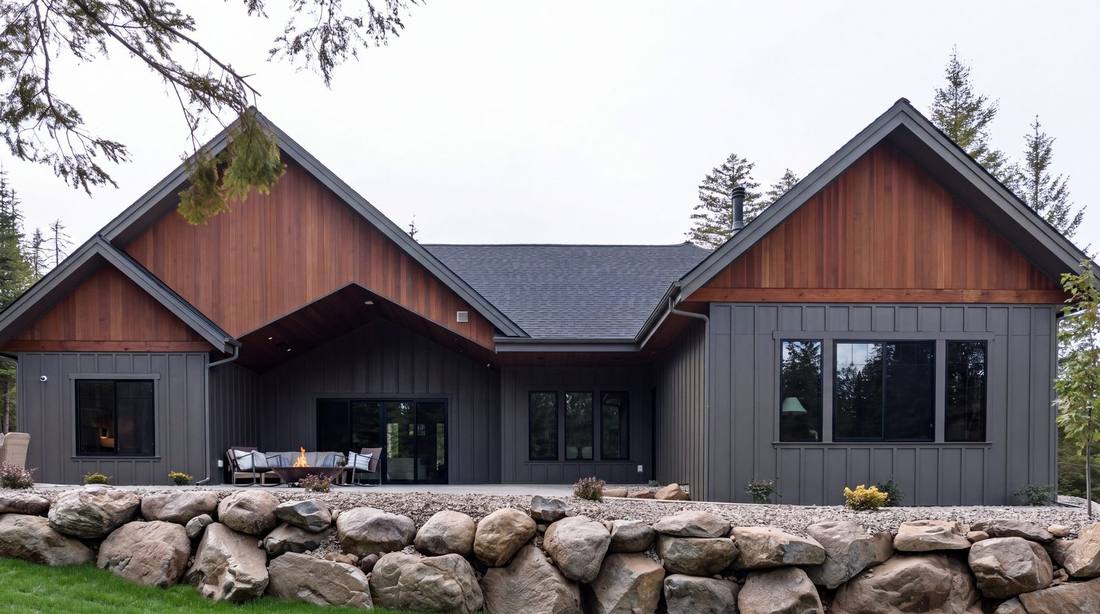
On a lakefront lot the water side is the real front of the house, and the plan should be organized around it. The main rooms, the primary suite and the covered outdoor living want the view. The garage, the mudroom and the utility rooms work best on the road side.
Slope is the next question. Many North Idaho waterfront lots drop steeply to the shore, which brings stairs or a tram, retaining walls outside the setback, and stormwater into the design. Water running off a roof and a driveway has to go somewhere other than straight into the lake. Exposure matters too: wind off open water, low western sun in summer, and how the snow sheds on the lake side.
And the toys need a home. Boats, paddleboards and their trailers need storage close to the water, which often means planning a shop or a deeper garage bay with the house.
Water, septic and space
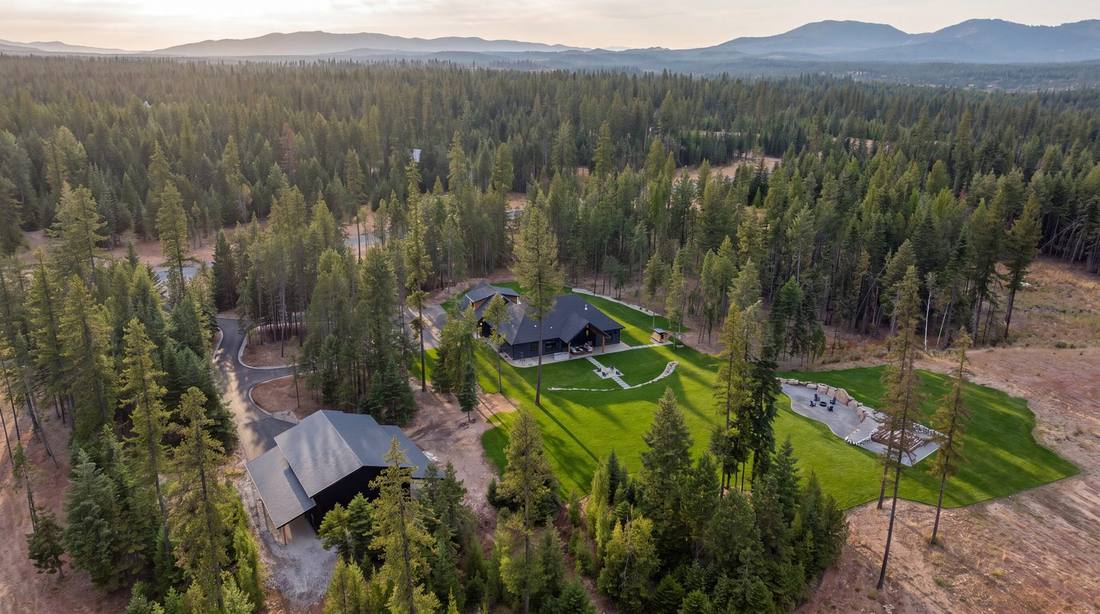
Waterfront lots are often narrow. Between the shoreline setback, the road, the well and a septic drain field, the buildable area can be smaller than the acreage suggests. Some lakefront areas are on a sewer district; many are not. Our guide to wells, septic and permits in Kootenai County walks through the order those approvals happen in.
Before you buy waterfront
- Where is the high water mark, and how much buildable area is left behind the setback?
- Is there an existing dock, and is it permitted?
- Is the lot on a sewer district, or will it need septic? Where would the drain field go?
- How steep is the bank, and how will you get down to the water?
- Which jurisdiction is it in: a city, the county, or another county?
We like to walk a property before anyone draws a line, and on the water that matters more than anywhere. If you are looking at a lakefront lot, here is how we work a private parcel, or bring us the listing and we will look at it with you.
Sources: Kootenai County Code 8.7.111, Shoreline Management Area, and the county’s waterfront property brochure; Idaho Department of Lands, Lake Protection Act single-family dock and water intake guidance; Bonner County planning records; Stafford v. Kootenai County (Idaho Supreme Court, 2011). Requirements change; confirm the current rules for your parcel with each agency.
← Back to the JournalMore from News & Journal.
Wells, Septic and Permits: Building on Land in Kootenai County
Access, septic, water, power and the county permit — the order it all happens in when you build a custom home on raw land in Kootenai County.
Read the story ›Building a Custom Home on Your Own Land in North Idaho
Already own acreage? Here’s how the process works when you build on your own land — from walking the site to handing over the keys.
Read the story ›Designing a Wildfire-Ready Home on a Timbered Lot
Embers, roofs, vents and the first five feet. Designing a home on a timbered North Idaho lot to hold up in fire season.
Read the story ›