
Guide · November 2026 · 3 min read
Designing a Wildfire-Ready Home on a Timbered Lot
The trees are why most people want land in North Idaho. They are also fuel, and fire season is part of living here. The good news is that a lot of what makes a home safer in a wildfire is decided during design, costs little when it is planned from the start, and leaves the trees you love standing.
How homes actually catch
Most homes that burn in a wildfire are not overrun by a wall of flame. They are lit by embers, carried ahead of the fire, that land in a gutter full of needles, slip through a vent, or settle into bark mulch against the siding. The ground right around the house is where embers do the most damage, which makes it the place to start.
Think in three zones
The National Fire Protection Association’s Firewise program describes a home ignition zone in three rings:
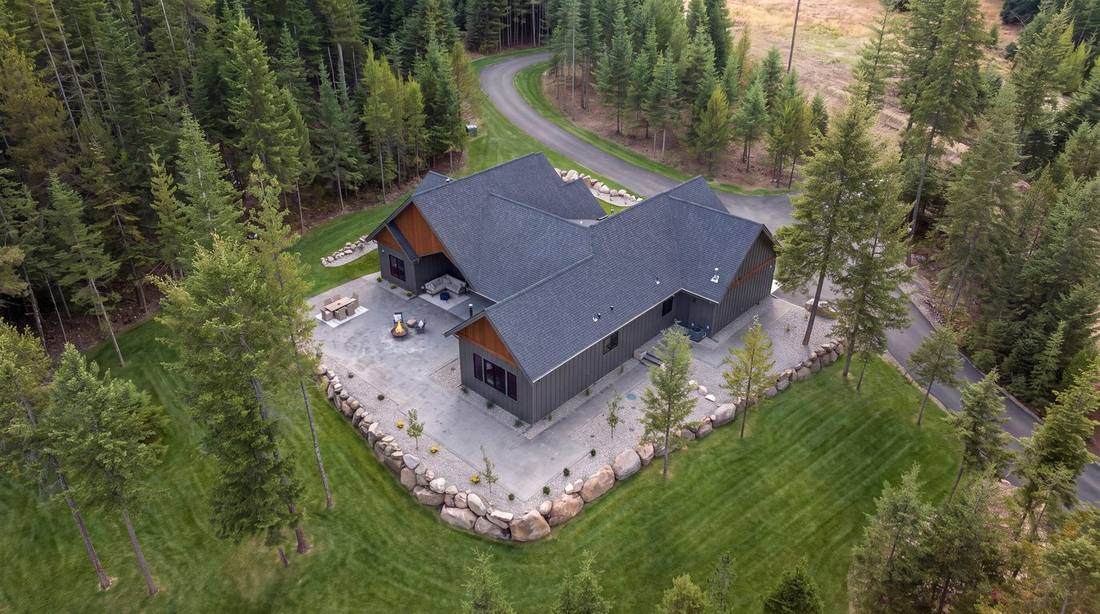
- Immediate, 0 to 5 feet. Noncombustible. Gravel, stone or concrete instead of bark mulch, nothing stored against the walls, and no branches hanging over the roof.
- Intermediate, 5 to 30 feet. Lean, clean and green. Maintained lawn and spaced plantings, with lower branches limbed up so fire cannot climb into the trees.
- Extended, 30 to 100 feet. Reduced fuel. Thin the trees, clear dead material, and keep space between crowns.
As a rule of thumb, trees 30 to 60 feet from the house should have at least 12 feet between their canopies, and trees 60 to 100 feet out at least 6 feet. On a five-acre parcel that still leaves a lot of forest.
Design choices that help
The roof. Roof coverings are rated Class A, B or C for fire, and Class A is the most resistant. A simple roof with fewer valleys collects fewer needles, and metal gutter guards keep debris out of the gutters.
Vents. Attic and crawlspace vents are a common way in for embers. Ember-resistant vents with fine mesh close that door.
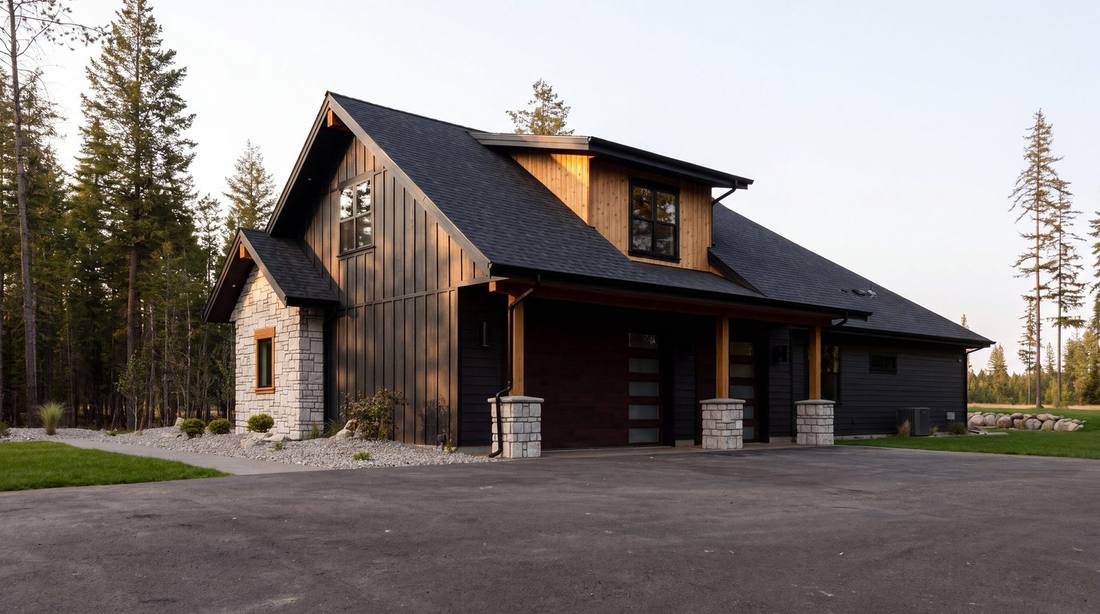
The base of the walls. The bottom of the house sits closest to the ground fuel. Stone or other noncombustible material at the base, and a gravel strip along the foundation, do double duty as a design detail and a defense.
Decks and patios. An open deck collects needles underneath and can carry fire to the house. Enclosing the underside, choosing ignition-resistant decking, or building the outdoor living on a stone or concrete patio all help.
Windows. Multi-pane, tempered glass holds up to heat far better than single panes.
Siting the house and the shop
Fire guidance suggests keeping outbuildings at least 30 feet from the house, or giving them their own defensible space, and placing a propane tank about 30 feet away as well. Firewood belongs well away from the walls, not stacked against them. These are easy decisions on a site plan and hard ones after the shop is built.
Access and water
A fire truck needs to reach the house and turn around. Driveway width, grade, clearance under trees and a turnaround all come into it, and fire district approval is part of getting a permit on raw land in Kootenai County. Our guide to wells, septic and permits covers where that fits.
Talk to your insurer early
Insurance companies look closely at homes in timber. Ask yours what it wants to see before the site plan is final. Their checklist is often a good list of the things above.
Keep the forest, thoughtfully
None of this means clearing the lot. It means choosing which trees stay, limbing them up, thinning the ones crowding each other and designing the house so the first five feet work in its favor. The homesites at the Estates at Farragut are timbered acreage, and Alderstone sits on one with its lawn running to the treeline. If you have land in the trees, let us walk it with you.
Sources: National Fire Protection Association, Firewise USA home ignition zone guidance; Federal Alliance for Safe Homes, Wildfire Strong; Pacific Northwest National Laboratory, Building America Solution Center, design for wildfire resistance. Local requirements vary; confirm with your fire district.
← Back to the JournalMore from News & Journal.
Building a Custom Home on Your Own Land in North Idaho
Already own acreage? Here’s how the process works when you build on your own land — from walking the site to handing over the keys.
Read the story ›Wells, Septic and Permits: Building on Land in Kootenai County
Access, septic, water, power and the county permit — the order it all happens in when you build a custom home on raw land in Kootenai County.
Read the story ›The Estates at Farragut: Five-Acre Homesites Near Farragut State Park
Twenty-seven private, tree-lined five-acre homesites on Leonard Loop — build-ready, minutes from Farragut State Park and Lake Pend Oreille.
Read the story ›